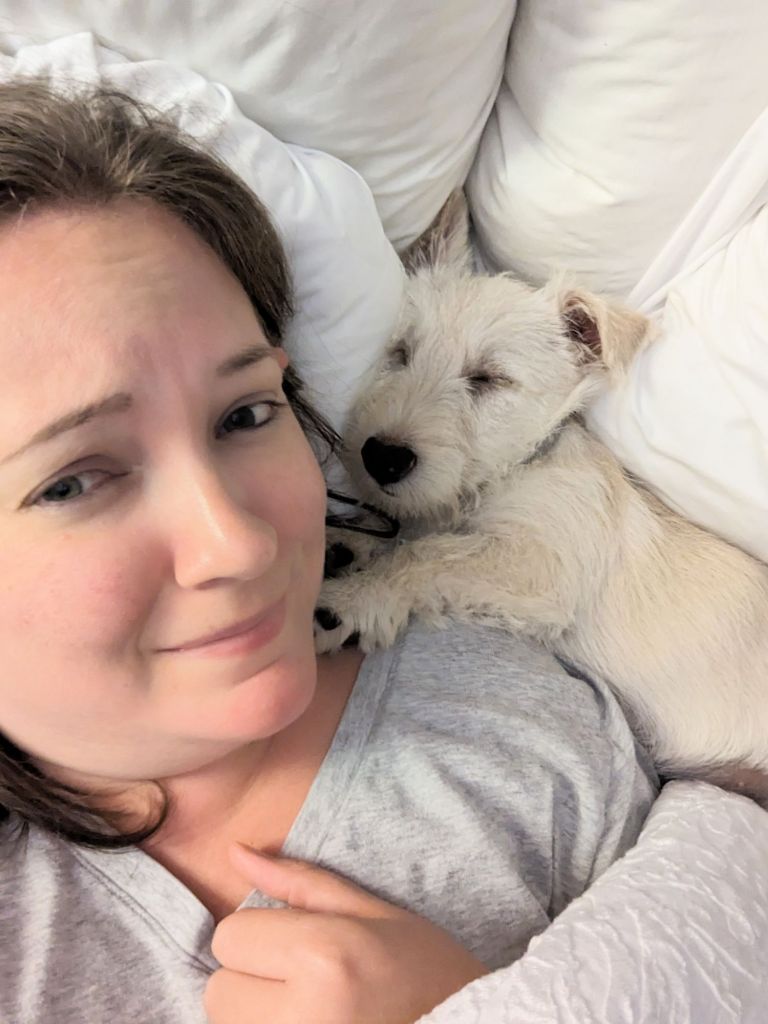
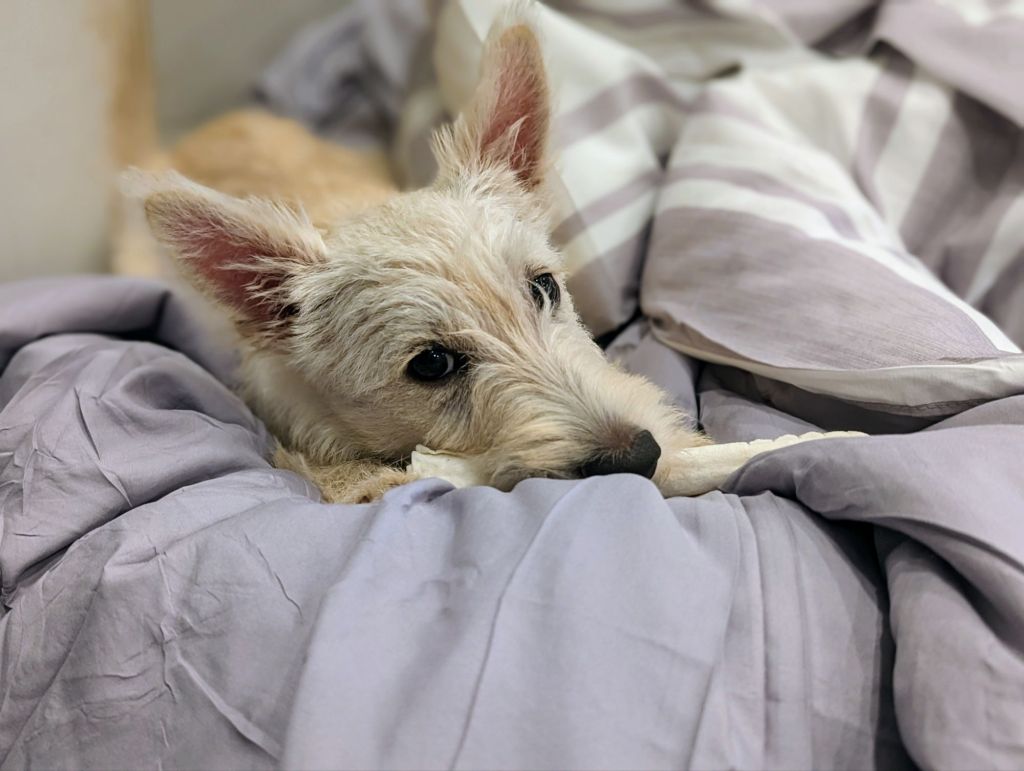
Luna is an incredibly feisty wheaten Scottie that comes to us via a small breeder by the name of Steve Greenich in Ohio. I’d been on the prowl for a wheaten female for quite awhile when I stumbled upon a video of Steve giving her a bath around three weeks old. She stared at him judgementally the entire time without so much as moving a muscle. The amount of Scottitude was off the charts and I knew I wanted to add her to our pack immediately.
Luna is one of the most affectionate, snuggly Scottish Terriers that I’ve ever met. Within two hours of meeting me she was curled up and snoring on my shoulder at the hotel. She barely made a peep on the plane ride home, but she sure made big noises when we got there! At just twelve weeks old, she walked into our house like she owned the place. The other two dogs merely shrugged and moved over. Luna’s been running this joint ever since.
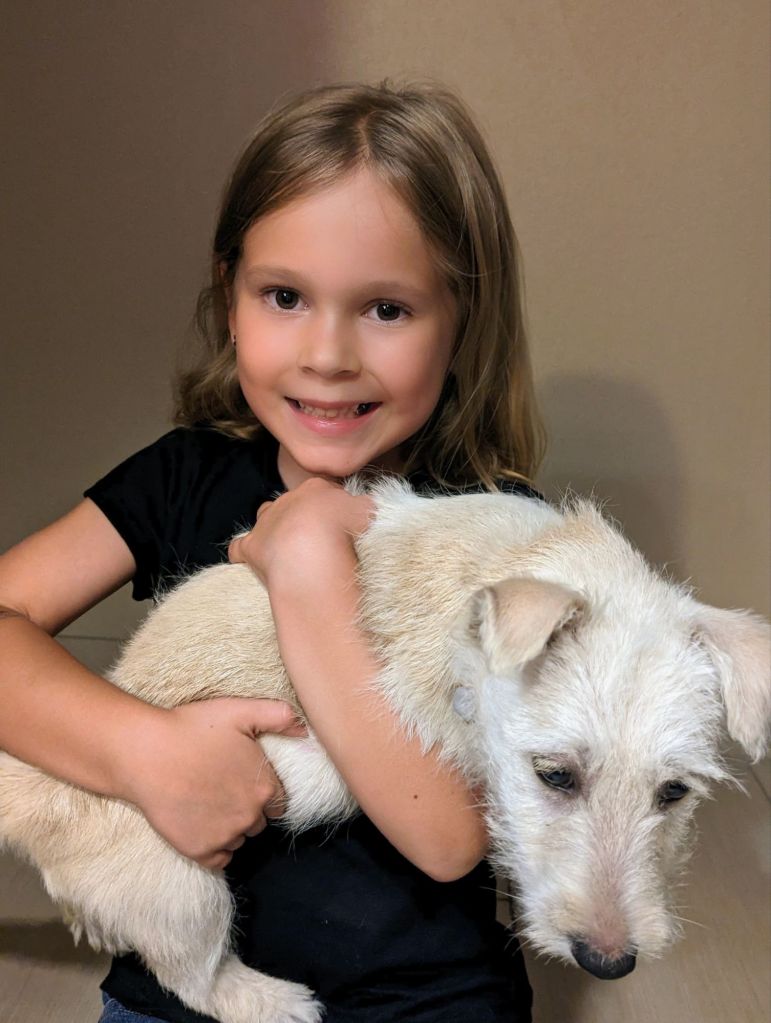
She’s truly fantastic with children. My youngest daughter has picked her up every which way with barely a widened eye in return. She has a relatively high prey drive (even for a Scottie). Squirrels beware! Despite this, she’s fantastic with cats and has never attempted to chase or harm one.
Like most Scotties, Luna is dominant with other dogs. While not outright aggressive, she’s not afraid to tell another canine off in a rather dramatic fashion at the slightest provocation. She’s all bark and no bite, but she’s certainly not gifted in the canine humility department. I suspect that she’d be an absolute whiz at Barnhunt, so we’ll be giving this a go at some point in the near future!
Once upon a time, I ran across a post on Facebook from a lady who was doing the usual dog rescue stuff. She was trying to get a “freedom ride” for a rescue to make it from Louisiana to…somewhere else. I don’t quite remember where. I’m a sucker for a pooch in need and I had nothing going on that weekend, so I offered to drive a six-hour leg and meet the next participant in the transport chain near the border of South Carolina. She was thrilled with the offer of help and friended me so that we could stay in contact, maybe make this a semi-regular thing. I was happy to oblige.
Later that week, I posted a picture of a Scottie puppy (Roland if we’re being specific), mentioning that his buyer had fallen through and that he’d come available. Within minutes, this individual was blowing up my phone.
“You’re a breeder?! How can you possibly do rescue work and breed at the same time?!”
Then, before I could even reply, she blocked me.
Don’t worry. This rescue dog judges me too.
I get the same reaction when I talk to my breeder friends about my rescue efforts, although they’re far less extreme about it. My dear friend who breeds Pembroke Welsh Corgis once asked if I was afraid of bringing in diseases (I am). Another Scottie breeder once politely attempted to set me straight in a good-natured way. I’d been staying up all night syringe feeding an ailing 8 day old rescue puppy and she’d seen my posts about it.
“He’ll never make it, Meg. You have no idea what happened to them health-wise before they got to you.”
She wasn’t wrong. He passed three days later. And I had nothing to show for it besides a positively unholy sleep deficit and a $300 vet bill, which I paid out of my own pocket rather than asking the rescue to cover.
My absolute saint of a mother helped shoulder the care of that little one. I can’t thank her enough.
We humans are really, really great at pattern recognition and grouping things together by similar characteristics. But, we don’t really fit into either group neatly. Nobody seems to know what category to file us in. We exist on both sides of a chasm so wide that the two extremes tend to view each other as mortal enemies.
It confuses both my puppy buyers and rescue dog adopters, too.
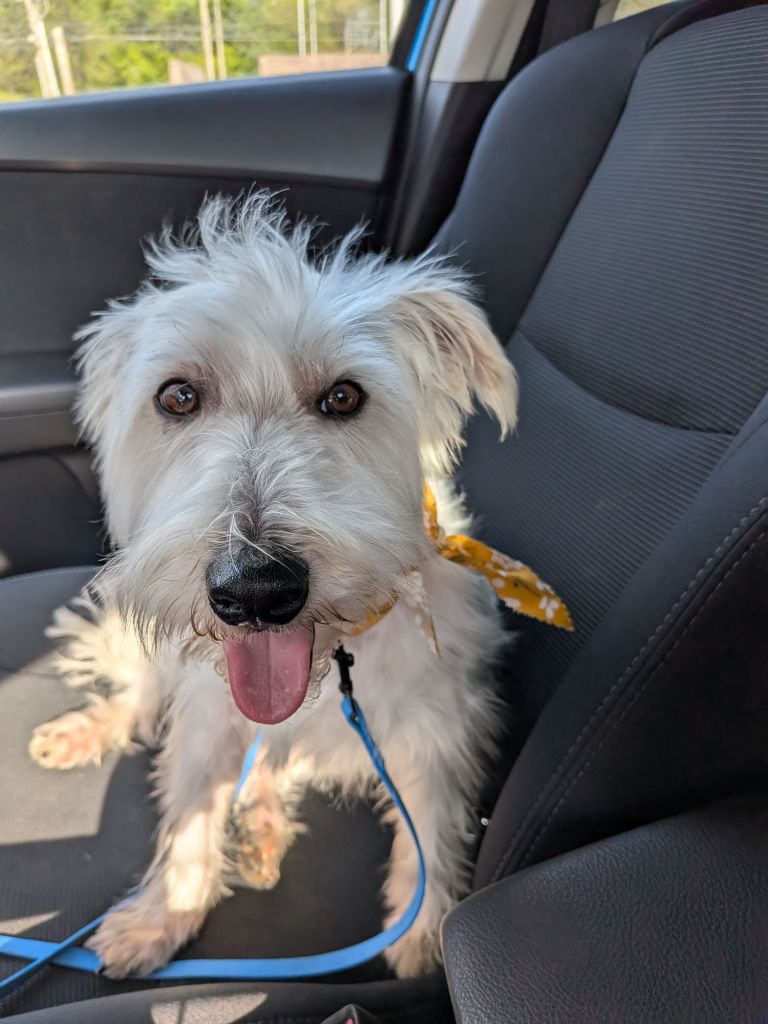
Recently, I pulled a little Westie mix from the local shelter. Two of my closest friends helped watch him. Shauna with Curated Canines donated a grooming session to get him spiffed up, and he very quickly found a perfect home.
Shout-out to my amazing friends, Trevor and Marquia, for fostering this guy as Skye was whelping her current litter.
When I delivered him to his new owner, she seemed a bit confused.
“So…you’re not a rescue really.”
I’m not. I mean…I’d pulled him under Brindlee Mountain Animal Rescue just to circumvent having to pay the fee to spring him out of doggie jail, but his care, costs, and adoption process were totally on me. They asked me how often I do this sort of thing. I replied that I do it whenever the need arises. That answer didn’t seem to be quite what they were expecting, but it’s the truth. They couldn’t accept not paying an adoption fee, so they made a generous and very appreciated donation to BMAR instead.
As an aside: Rhonda, the owner/operator of BMAR, is the only person I’ve ever run across who’s never balked. When I called her out of the blue and offered to pull Juniper from the kill shelter in Marshall county and raise her litter, I was a little nervous to spill the beans.
“Just so you know, I’m also a breeder of Scottish Terriers. It’s been a problem when I try to volunteer my time to rescue organizations in the past.”
Her response was immediate, indignant, and hilarious.
“I don’t give a damn what you are so long as you’re willing to help.”
Our very first rescue litter
That struck a chord with me for sure.
I don’t view working to save my favorite breed as any different than working to save rescue dogs. Scotties are becoming scarcer and sicker by the year. Why wouldn’t I help breed exceptionally diverse Scotties to try and address this? Nobody else is breeding specifically with genetic variability in mind so far as I’ve found. And why wouldn’t I try to help that little eight day old lost cause? His chances were low, but not zero. He deserved somebody willing to help him fight, even if he ultimately lost in the end.
We don’t fit into any one specific mold. At the end of the day, we’re just…willing to help. Rhonda really nailed that from the jump. It doesn’t have to be any deeper than that, and we don’t particularly care if that confuses people.
So, this is your reminder to be an outlier. Do weird stuff. Break the mold. The world needs more people who go against the grain, and Lord knows there’s not enough help to go around.
We have been eagerly awaiting our next litter of Scottie puppies for quite awhile now. It’s been two full years since we last raised a litter and we’re very, very excited to have pups in the whelping box again.
Dad to this litter is Bain of Greyhouse Terriers, a sweet as pie wheaten gentleman with the most magnificent coat I’ve ever seen. You could handstrip his jacket for days. His temperament is amazing and he’s never met a stranger. Kim with Greyhouse has been breeding companion Scotties for several years and I hold her in very high regard.
Bain, in all his floofy glory
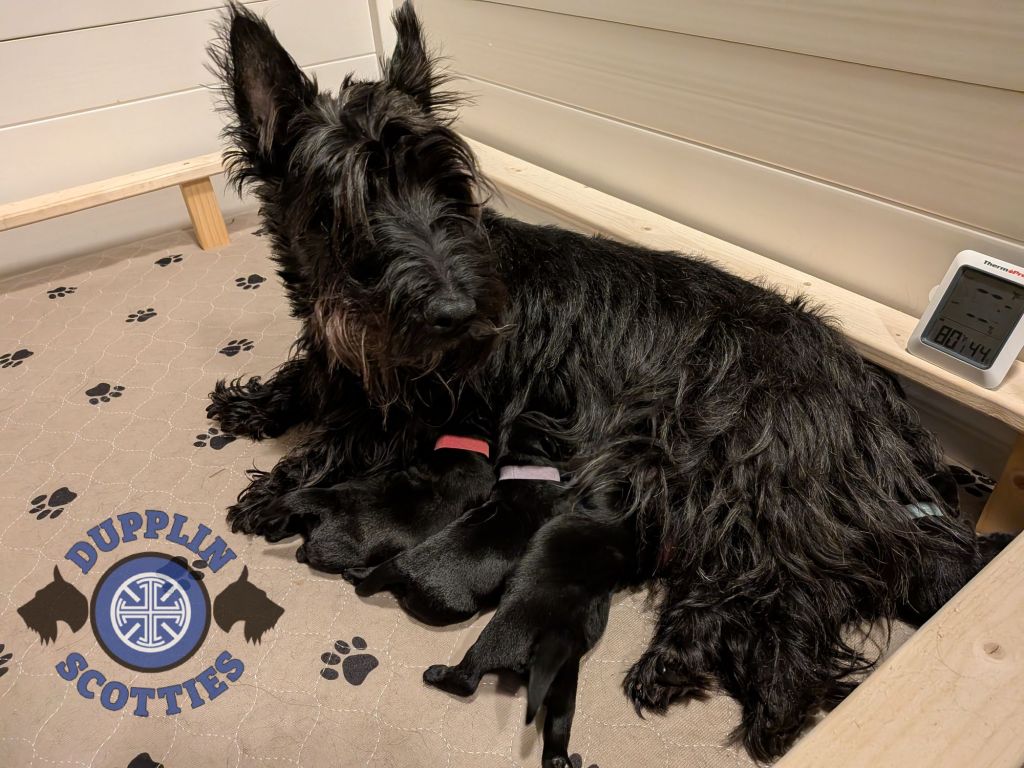
Six little ones, four boys and two girls, were born on April 16th in the early afternoon. All are black aside from one little brindle lad in the orange whelping collar. As always, Skye did absolutely amazing and has been a very attentive mama. She’s extremely protective of her littles at first, so we’ve been giving her some space. We’ll get individual pictures later when she’s not so stressed out by people messing with her babies. Images are sparse due to this, but I do have a few to share!
Briar (orange) and Ash (red)Aspen (green)Rowan (teal) and Rose (pink)Violet (purple) and Rose (pink)AspenBriar and Ash, who always seem to find each otherRowan
Initially, all of these pups were spoken for but several individuals on the wait-list have chosen to pass for various reasons. Due to this, we do have two puppies currently available – one girl and one boy, both black. This is subject to change, so check in with us via email at dupplinscotties@gmail.com or Facebook message to see if this is still the case at the time of reading.
All pups come vaccinated, vetted, microchipped, extensively socialized and housebroken to a litterbox. AKC registration is included and free pet sitting services are provided for local buyers in our home. Buyers must sign a contract agreeing to return their Scottie to us in the event that their dog needs to be rehomed.
I’m not a glutton for punishment, I swear. I don’t enjoy being overburdened. There are lots of things I would rather do than scramble around like a crazy woman.
…But some days you’d wonder.
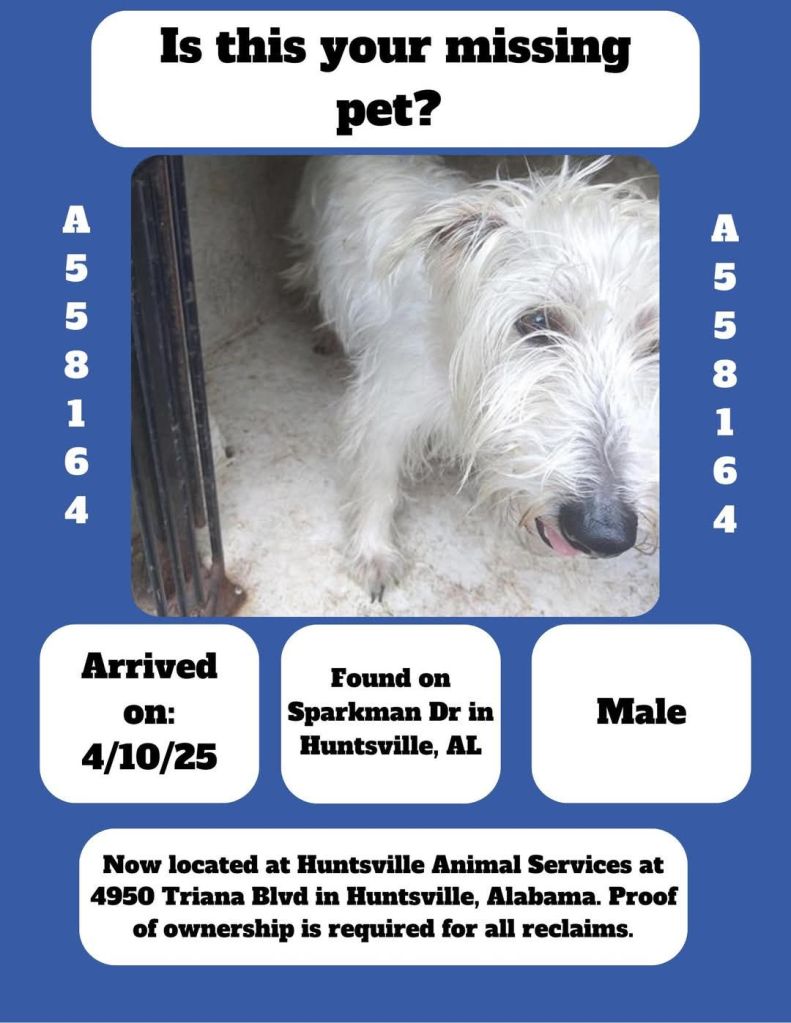
I was just minding my business (honest!) when this image basically fell into my lap.
…damnit
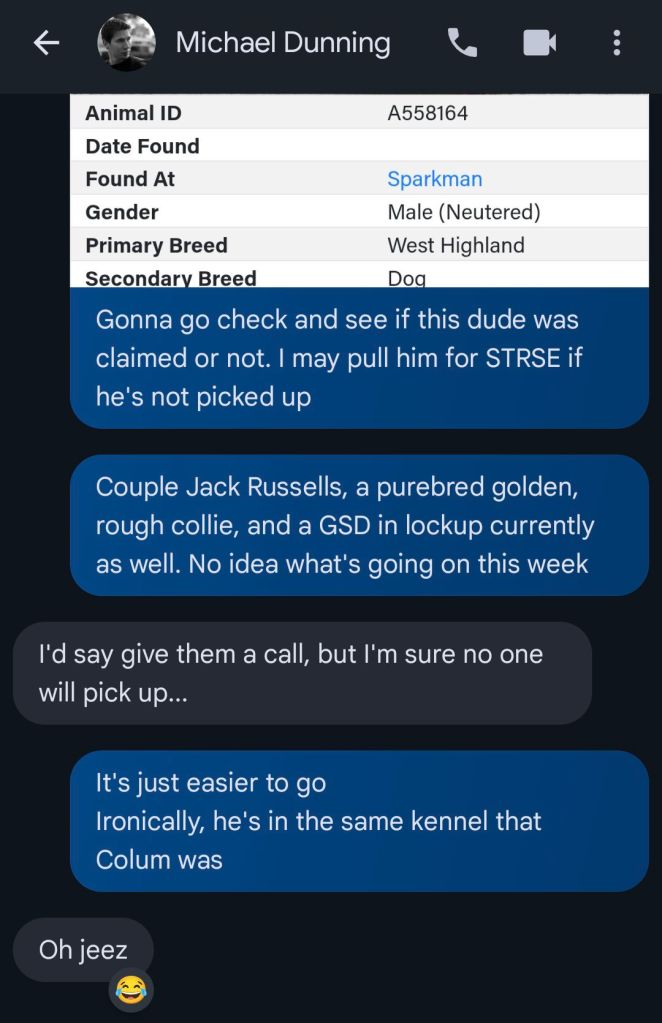
We have puppies due in two days. We have a puppy enclosure to clean, a dryer that’s yet to be delivered, a special needs daughter to care for on top of it all. But I can never ignore a Scottie or Westie sitting in a shelter. They’re such sensitive dogs. If I didn’t go and get this little dude, I’d think about him all weekend.
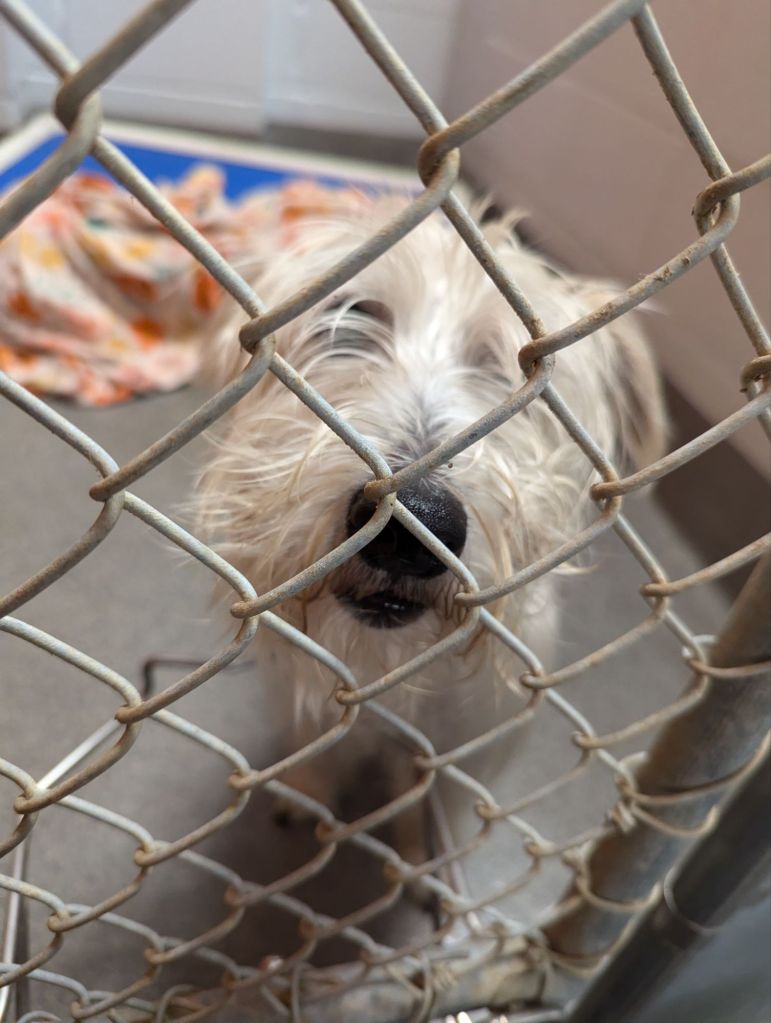
He already knew we were doomed
He was indeed still not claimed at the shelter. His collar had a zip tie on the jump ring, which probably held tags at one point. He’s filthy, his coat is matted, and he’s skinny as a rail. Wherever he came from, I think he’s been loose for awhile.
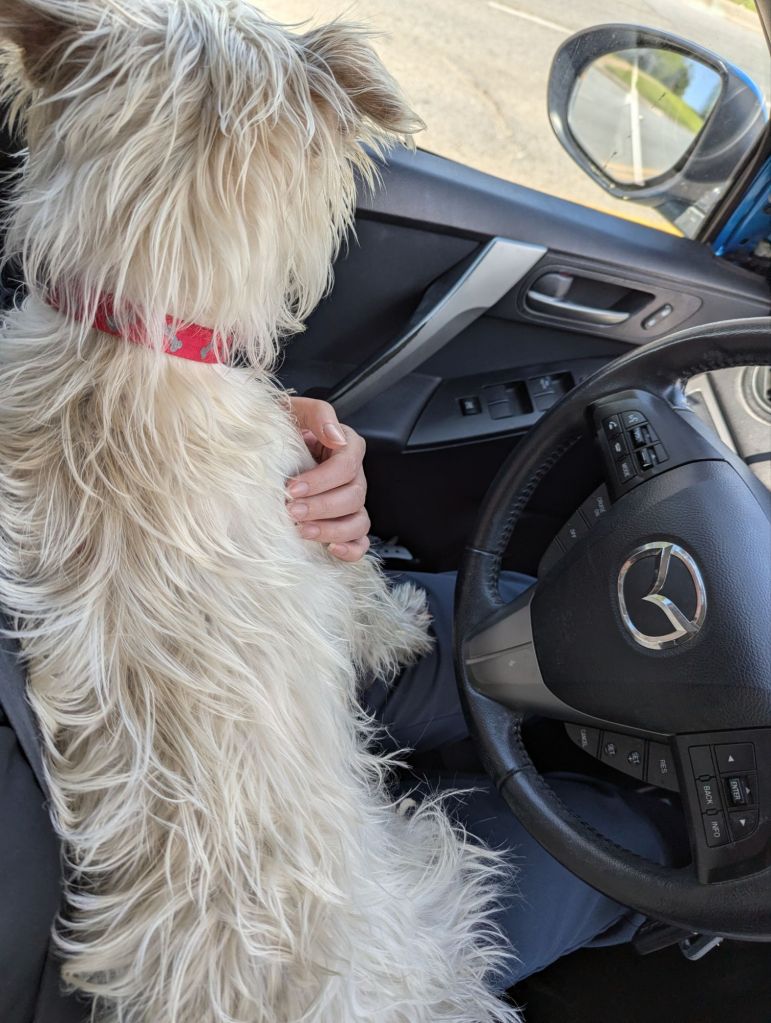
STRSE wasn’t interested, so I checked with Rhonda at Brindlee Mountain Animal Rescue to see if they minded me pulling him under her name. As soon as I had the thumbs up, the paperwork was signed and he was loaded into my passenger seat.
… Which quickly turned into my lap
He’s definitely been loved by somebody in the past. He understands basic commands, he knows what a dog bed is, he’s played with toys. He appears to be housebroken. I about fell out of my chair when he rang the potty bell to go outside. This dog was somebody’s baby and it’s such a puzzle regarding how he ended up as a stray. Judging from his nutrition status I think he’s been loose for a couple of weeks at the very least.
Our youngest daughter immediately named him Skylar, so I guess that’s what he goes by now.
Skylar will be available for adoption after 4/17/25.
_______________________________________
UPDATE: Skylar was adopted almost immediately. He now lives with his forever family in Priceville, AL along with his new Westie sister Marlo.
He goes by Zeke now
I’m thrilled that this little guy found his happily ever after. As always, we will continue to commit to rescuing these little Scotties and Westies when they pop up.
Fun fact about me: I am not very good at keeping my mouth shut. About, well…anything. That trait is doubled when it comes to matters that I’m passionate about, and I’m very passionate about genetic preservation of the Scottish Terrier.
I mentioned the possibility of Scotties one day requiring a genetic rescue project that involves outcrossing to other terrier breeds in my last blog post. It was well received here, mostly because this is my space and like tends to attract like. The people seeking us out have similar views on inbreeding depression and genetic predisposition of diseases. But, when I bring this idea to the wider audience of Scottish Terrier fanciers across the internet at large, I’m almost always greeted with handwringing, fist-shaking and admonishments…often by very, very influential members of the STCA. This constant source of ridicule is why I tend to hang out in friendlier areas such as The Functional Dog Collaborative.
If you’re not familiar with this stellar group of breeders, you should check em out. 10/10.
But, I eventually end up back in the Scottie circles one way or another. I had yet another such run-in with a STCA member that I hold in high regard above all others. I’ll leave the individual nameless out of respect, but this person essentially asked me what evidence or sources I have to cite that support the idea that outcross projects would be beneficial whatsoever. Considering the fact that I took the time to write a lengthy reply with the requested sources, I thought it prudent to go ahead and host it here as well.
Heterozygosity by breed
I’m legitimately so glad you’ve asked! I’ve researched this topic extensively. Honestly, I would love to sit down across a table and have a cup of tea to discuss this in person, but I guess Facebook comments will have to do.
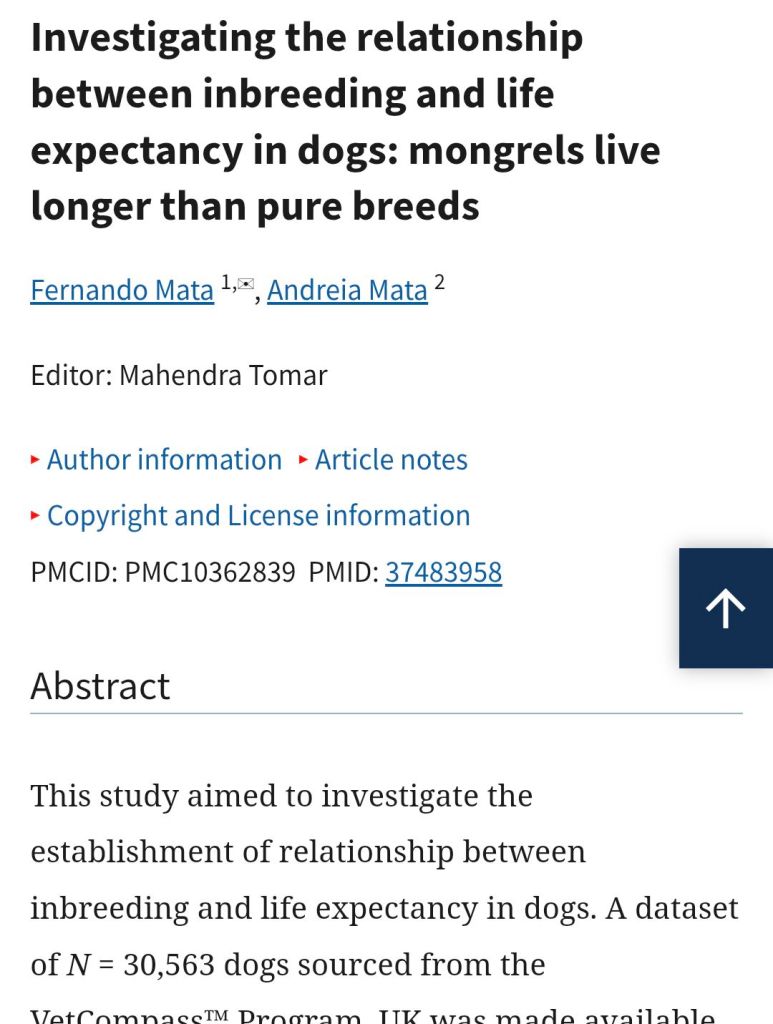
This article is primarily based on longevity and body size, but there are interesting tidbits buried within the text body that can be teased out. First, allow me to draw your attention to this image I’ve posted at the head. According to this study, Scottish Terriers are one of the least heterozygous (or, put more simply, least generically diverse) breeds of dog on record. We know that highly homozygous animals populations are far more likely to be impacted by deleterious genetic conditions. I won’t bother to source that claim, you can Google it within ten seconds and this post is going to be long enough as it is.
We also know that populations with high coefficients of inbreeding are more likely to be impacted by genetic diseases of all inheritance patterns than lower COI populations. Estimations of average COI in Scotties varies according to source, but it’s generally agreed to be somewhere between 30-35%. This is high when compared to other dog breeds. All purebreeds overall average out to around 10-15%, which is significantly lower than our beloved little guys. Zoological based preservation programs in other species have historically set a goal of 10% COI in order to keep the breeding population healthy. Obviously, Scotties are far above this metric and the previous information about them being so highly homozygous positively correlates with their COI, as expected.
This article also shows that Scottish Terriers have a high hazard ratio compared to other breeds. Additionally, it found that mixed-breed dogs have an average life expectancy of 1.2 years longer than all purebred dog breeds. No conclusions were publicly stated regarding mixed breed longevity compared against Scottish Terriers specifically of course, but the raw data is available and easily crunched if one has the inclination to do so. I do not, as I’m already steadfast in my views on this topic, but you might.
This paper, just recently published, is a fascinating read and a call to action regarding our ailing purebreds overall. I’ll implore you to read the whole thing, but for practical purposes I’ll draw your attention to this paragraph specifically:
“The build-up of heritable diseases is a predictable result of increased homozygosity and progressive loss of genetic variation over time in closed breeding populations, no matter the species, due to selection and genetic drift. In dogs, however, some additional factors seem to have fueled the process. Many breeds were established with a limited number of founders so when the studbooks were closed – an event which occurred at variable times in different breeds and countries – the genetic variation was already small. Also, only a small proportion of each generation of dog breeds generally contributes to the next generation. Extensive use of popular sires (often dogs that have achieved extraordinary results at dog shows, utility tests or other kinds of dog sports) increases the frequency of the genetic variants they carry – including deleterious mutations – in the population. The widely promoted practice of deliberate inbreeding and line breeding – at least in the past – increased the risk of homozygosity for these variants in subsequent generations leading to the current situation with high levels of inherited disorders (Oliehoek et al. 2009; Leroy & Baumung 2011; Marsden et al. 2016; Broeckx 2020; Ikolo et al. 2023).”
Bear in mind that these effects are exponentially accelerated in the presence of a declining breeding population. We’re all aware that Scotties are becoming fewer by the year. As their numbers fall, further genetic variability will be lost and homozygosity will therefore continue to rise. This isn’t a hunch, it’s mathematical fact. While it’s true that some breeds with relatively high COIs are also relatively healthy (within the context of purebred dogs, anyway), it’s also true that these breeds tend to be more popular than ours. Scotties get the short end of the stick on both accounts.
The author goes on to list several examples of successful outcross projects that have positively impacted the health of the breed. Outcross projects such as the Irish Red and White Setter project have been wildly successful. Some breed clubs have allowed their studbooks to remain open altogether.
Ooga booga! An outcrossed dog! Quick, everybody clutch your pearls!
“The Danish Swedish farmdog was reconstructed in the 1980s and received FCI-recognition in 2019. All the way through the reconstruction process, the breed register was kept open, and still remains open by the Scandinavian kennel clubs. This means that owners of dogs showing phenotypic resemblance with the Danish Swedish farmdog can have their dog evaluated by an authorised judge and – if approved – the dog is enrolled in the breed register with a blank pedigree (DSGK 2024). The Finnish kennel club has an open breed registry for a number of other breeds, including the Jack Russell terrier, Lapponian herder, Norbottenspitz, Pyrenean sheepdogs, and Finnish lapdog. Apart from the phenotypic evaluation, entry into the breed also requires a DNA profile and testing for breed-specific hereditary diseases (FKC 2024). As a way to obtain better health, the Danish kennel club decided to open the breed registry for the English bulldog, French bulldog and pug by 1 May 2024. Entry into the registry requires a phenotypic evaluation and a maximum grade for BOAS (Brachycephalic Obstructive Airway Syndrome) of 0 or 1 (DKC 2024a).”
There is zero reason that a similar program could not be adopted for the Scottish Terrier. None whatsoever. The carrier genes of the conditions that plague our breed have not all been identified. I’m confident that they will, almost exclusively because of the work that you and [redacted] have put into the Scottie DNA bank. You’re both the biggest contributors to saving our breed, bar none. What you guys have pulled off is nothing short of remarkable, and I deeply thank you for doing what you have done and thank you in advance for what you will continue to do for our breed.
But…why should we wait for these genes to be identified at all, when there are so many stellar outcross programs to model after already? Why must our dogs get sicker, live shorter lives, and suffer more while the work to find these polygenic factors is ongoing?
And for what gain? For the sole sake of saying that our dogs are “pure?”
Are Dr. Schiable’s LUA dalmatians not “true” dalmatians? They look like Dals. They act like Dals. And more importantly: they’re healthier than the “pure” Dals. They suffer less. Isn’t that worthy of forgoing the stuffy “pure” label?
Stocklore Stipples’ pedigree.
I’ve answered your question in great detail. I believe I’ve demonstrated the detrimental effects of high homozygosity and out of control COI. So now I pose a question to you as well:
What evidence do you have that our breed can be salvaged if the studbook remains closed?
I don’t know why I’ve always felt this way, but I have consistently loved Scotties even as a young girl. Why is that? Well, I’m not really sure. I don’t recall ever seeing one as a kid other than the little silver Monopoly dog that we all know so well. I certainly never owned one myself. We had an assortment of family mutts and various purebred dogs throughout my childhood. None of them were Scotties, and yet Scotties have always been on my mind. I suppose it’s no surprise that I now own three of them and breed the occasional litter as well.
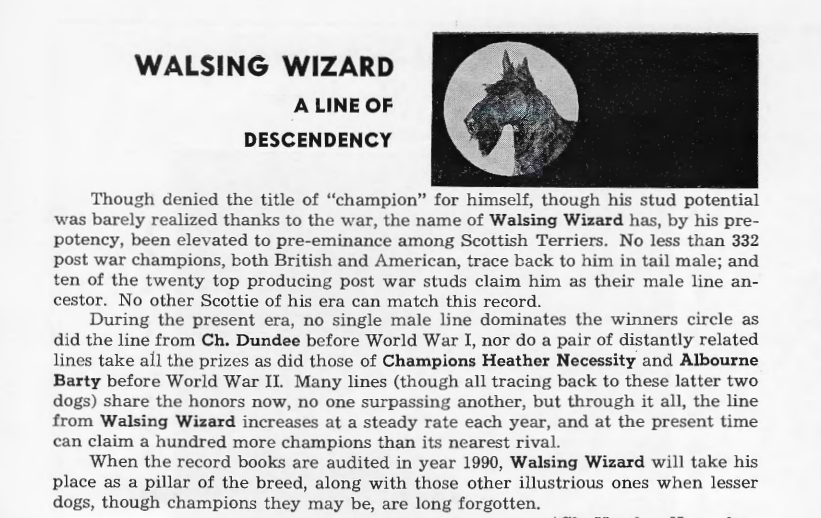
Back then Scotties had the reputation of being a sturdy breed. They were considered to be a relatively healthy and a wise choice for the savvy buyer. I had always held this in my mind as hard, indisputable fact. Imagine my surprise, then, to discover that this may not be an accurate representation any longer.
A few years after I met Tori, I started researching the breed in earnest. What I discovered was heartbreaking. Between 1975 and 1995, the incidence of bladder cancer in dogs increased by over 600%. Leading the charge among the affected breeds were Scottish Terriers, who have a twenty-fold increased risk to develop a specific form of bladder cancer called Transitional Cell Carcinoma. Other than TCC, Scotties suffer from high rates of craniomandibular osteopathy, Von Wilebrand’s Disease, Cushing’s Disease, liver ailments and, of course, the famous Scottie Cramp.
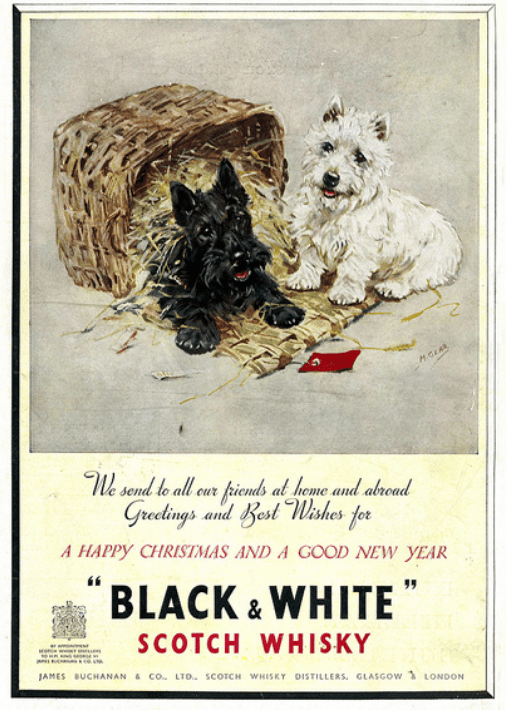
If you know the history of Scottish Terriers, this sudden downturn of health is not altogether surprising. Scotties were, at one time, one of the most iconic breeds of dogs in the world. They were owned by the likes of Queen Victoria, Franklin D Roosevelt, Charles Lindbergh, Humphrey Bogart and many others. These star-studded names and many more owned one or several of these charming little dogs. As their popularity became ubiquitous, the instantly recognizable Scottie incidentally became a powerhouse of advertising. My daughter actually has an antique tin Scottie sign hanging above her desk. Their likeness was used to promote everything from whiskey to kitchen appliances to railway travel.
This fiesty breed was all the rage and on top of the world. But, all good things come to an end, and the reign of the Scottish Terrier’s seat as the most popular dog breed in America was no different. They were overthrown sometime in the late 40s to mid 50s and now enjoy just a fraction of their former glory. But as their numbers in the general population began to slowly dwindle, their prowess in the show ring continued on for significantly longer. And this, unbeknownst to Scottie fanciers at the time, would be their eventual downfall.
There is such a thing in the breeding realm as “popular sire syndrome.” I will spare you my own fumbled attempts at describing this article and instead will defer to a foremost authority on the matter, Dr. Jerold S. Bell of Tufts Cummings School of Veterinary Medicine:
An important issue in breeding is the popular-sire syndrome. This occurs when a stud or tom is used extensively for breeding, spreading his genes quickly throughout the gene pool. There are two problems caused by the popular-sire syndrome. One is that any detrimental genes which the sire carries will significantly increase in frequency – possibly establishing new breed-related genetic disorders. Second, as there are only a certain number of bitches or queens bred each year, overuse of a popular sire excludes the use of other quality males, thus narrowing the diversity of the gene pool.
Every breed has its prominent individuals in the genetic background of the breed. But most of these become influential based on several significant offspring that spread different combinations of the ancestor’s genes over several generations. The desirable and undesirable characteristics of the ancestor were passed on, expressed, evaluated by breeders, and determined if they were worthy of continuing in future generations.
The problem with the popular-sire syndrome is that the individual’s genes are spread widely and quickly – without evaluation of the long-term effects of his genetic contribution. By the time his genetic attributes can be evaluated through offspring and grand-offspring, his genes have already been distributed widely, and his effect on the gene pool may not be easily changed.
In almost all instances, popular sires are show dog and cat champions. They obviously have phenotypic qualities that are desirable, and as everyone sees these winning individuals, they are considered desirable mates for breeding. What breeders and especially stud-dog and tom-cat owners must consider is the effect of their mating selection on the gene pool. At what point does the cumulative genetic contribution of a popular sire outweigh its positive attributes? A popular sire may only produce a small proportion of the total number of litters registered. However, if the litters are all out of top-quality, winning females, then his influence and the loss of influence of other quality males may have a significant narrowing effect on the gene pool.
This is a major concern with all breeding populations of any animal, but the effect is doubled, tripled, and even quadrupled in the instances of rapidly declining populations. As the gene pool shrinks, it becomes more and more challenging to avoid these popular sires.
And in the particular case of Scotties, there were a lot of them.
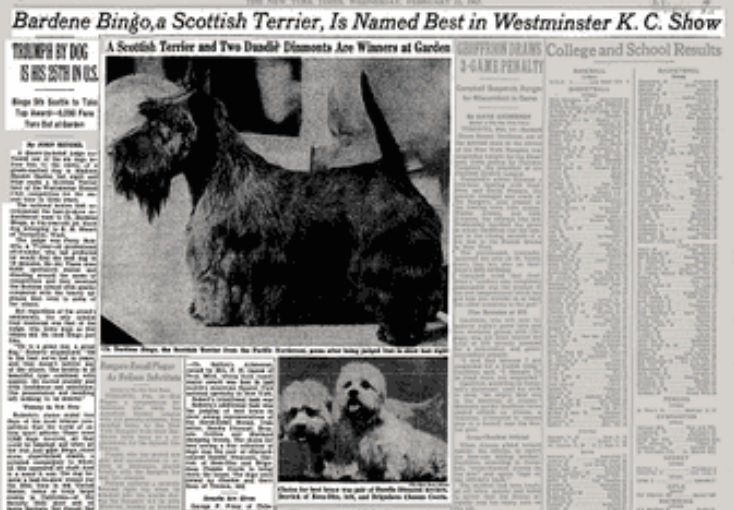
Bardene’s Bingo took the show dog world by storm in 1967 by becoming only the third Scottish Terrier to win at Westminster. He was widely bred and, more importantly, his pups were widely linebred. This is the practice of breeding related dogs (sometimes even as closely related as mother to son or father to daughter) in order to “set” a particular desirable trait in the line. Most traits that breeders select for, such as desirable ear set or correct body shape, are recessive in nature. Keeping the line “tight” amplifies the genes that produce these traits, but it also has the possibility of eliminating genetic variability.
The Bardene dogs enjoyed such an explosive popularity as studs that even today, their ripples can be seen in even the pet lines. Bardene Scotties had a particular quirk on their tails: a bit of heavily striped brindling around the base or the midsection that became known as “the Bardene ring.” Even though it’s been sixty years, my own dogs have this particular quirk as well.
But Bingo was certainly not the only popular sire of his time.
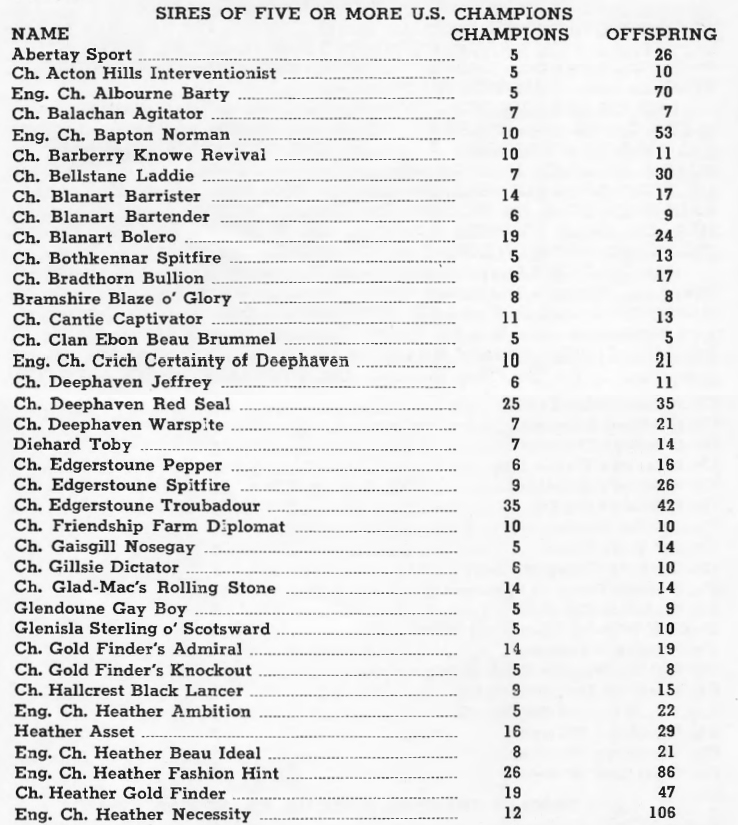
There were hundreds of dogs that produced 30, 40, even over 100 puppies. The most popular sires produced over 300, possibly as high as 500 puppies in their lifetimes. And these pups were subsequently bred back to each other over and over again in order to produce more champions. In fact, it became a point of intense pride to own a “double grandson” of many of these below names.
This continued on for years, even as Scotties became scarcer and scarcer. Their numbers fell precipitously in the 80s and 90s, to the point that breed clubs sounded the alarm about the possibility of detrimental health effects, and possibly even the extinction of the breed altogether. By the mid 2010s, they had been placed on the endangered breed registry in the UK. Registered litters have experienced a small bump in the last ten years or so, but not as much as we stewards would like to see…especially in their ancestral homeland.
The continued disproportion of Scottie dogs used for conformation vs Scottie dogs living as pets has become further amplified as their numbers decrease. In 2018, one out of every three Scottish Terriers puppies born from AKC stock went on to compete in a conformation show. This is wildly out of proportion of other breeds, who often maintain a reservoir of genetic variability within the pet populations and eventing or performance breed lines. Working or event breeders tend to select more for complex behaviors as opposed to physical traits, and complex behaviors are more likely to be governed by dozens of genes instead of just a handful. Therefore, selecting for behavior is inherently more likely to produce “heterozygosity,” or in simple terms, genetic variability.
Scotties, on the other hand, do not have eventing lines of any real significance. The same dogs that are used in conformation shows are the likely ones who compete in other trials such as Fast CAT, Barnhunt and EarthDog…and when they win, it further increases their desirability as breeding animals. The result of all of this has been comparable to a genetic megaphone, loudly broadcasting the same genes over and over again, drowning out everything else.
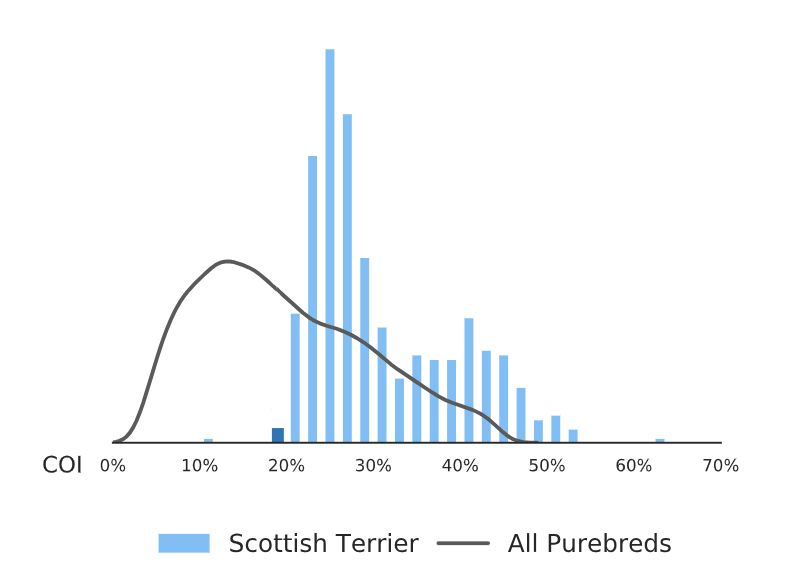
This has resulted in an overwhelming degree of inbreeding within our beloved little dogs. This constant biological copy/pasting in the pursuit of ribbons has led to the current situation we find ourselves in. Scotties have earned the dubious distinction of joining the list of the most inbred studbooks to date. If this seems hard to believe, then you might be interested in this next visual.
Embark, a popular genetic service available to breeders and pet owners, calculates the COI or “coefficient of inbreeding” of their received specimens. The grey line is the average COI of all purebred breeds, and the mean appears to be about 12-14%, give or take. Compare that to the blue bars, which represent Scottish Terriers. The mean here appears to be in the high 30s, at least visually. Goal COI for a healthy breeding population is often quoted as being 6%, but certainly no more than 15%.
Keep in mind that COI is not the end all be all of genetic measurements. There are several other factors in play, namely heterozygosity, RI, OI, and many other factors. It’s actually possible to have two dogs that are very closely related by pedigree and yet have very little genetic material in common. However, this usually occurs in much more populous breeds with a much wider availability of lines, often including those working and eventing lines we talked about previously.
Another visual for you:
Wisdom panel, another popular dog genetics service, measures the degree of heterozygosity in their submitted samples. The higher the degree of heterozygosity, the lower the chance of a puppy inheriting autosomal recessive diseases. This is the heterozygosity result of a Scottie who was bred almost exclusively with genetic variability in mind. Without careful breeding, heterozygosity is lost and diseases such as TCC run rampant.
So…what can be done about all this? Is all hope truly lost for the Scottish Terrier? Certainly not. But we must begin acting now in order to avoid disaster.
Firstly, I believe it is absolutely imperative that a large database of Scottie DNA be built so that factors such as RI and OI can be made accessible to breeders through services such as BetterBred. Fortunately, this effort is already underway! Scottie owners have been submitting their dogs’ DNA for years through a program initiated by the STCA. I applaud this massive effort, but the data itself has not been made readily available to companies or organizations that could put the utilization of it directly into the hands of the breeders in the form of pair predictors. Liberalizing this data would be immensely valuable to the breed. I have high hopes that this will come to pass eventually.
Big shout out to super heroes Marcia Dawson and Michele Geiger-Bronsky!
Second, breeders must stop gatekeeping their lines by refusing to issue full registration to puppies they produce. This adds huge roadblocks to prospective breeders who would like to increase the genetic diversity of their dogs. Thirdly, breed standards must be loosened in order to promote the intermixing of dogs who do not perfectly match the textbook. This may sound shocking, but some breeds, such as the Border Collie, do not follow a breed standard for appearance at all (coincidentally, it’s no surprise that the average coefficient of inbreeding of Border Collies ranges somewhere between 5% and 9%). Finally, breeding dogs must be shared across international borders in order to dilute the overrepresented genes within the US and UK populations…and I’m not talking about the popular sires from overseas.
Even if I could wave a magic wand and make all of this a reality overnight, it might still not be enough. The damage may very well have already been done. As TTC is likely to appear after six years of age, it is impossible to breed only dogs who are never diagnosed with it. There also appears to be some degree of environmental factor that triggers the gene to switch on and create tumors. This, unlike autosomal recessive inheritance patterns, is very difficult to track within breeding lines, as it requires breeders to stay in contact with their puppy buyers for an extended period of time.
Our final hope may lie in following the example of Dr. Robert Schiable of The Dalmatian/Pointer Backcross Project. If all else fails, intermixing the other terrier breeds that Scotties sprang from and then backcrossing them with Scotties may be our last resort to ensuring overall good health of the Scottish Terrier. Whether or not our parent breed club would ever choose to acknowledge such dogs as “true Scotsmen” remains to be seen, but I wouldn’t hold my breath. It took the AKC over 30 years to register Dr. Schiable’s Dals, and I believe Scotties would face a sterner fight than he did.
I’m not the only one who holds these views, but at times it sure feels like I am. Whenever I get dejected by yet another nonbeliever, I reread this article to center myself and remind myself of what I’m trying to accomplish.
You may have noticed something else interesting about that Embark graphic. I’ll point it out to you.
See that incredibly far left outlier over there? The one who appears to be around 12%? Did you wonder what breeder was represented by that tiny blip of blue? Did you also wonder whose litter of pups produced the highly heterozygous Scottie, Roland Duchane? Whose dogs are these?
If you were to ask Michael what drives him absolutely crazy about his wife, he’d say that I’m impressively bad at picking up after myself (in my defense, I get around to it eventually). But if you were to ask him what else drives him crazy, he’d probably respond that I’m prone to bringing home any number of critters at random times (I have no defense to bring here, I’m guilty as charged).
We were planning to rear one litter of Scotties that year and we had plenty of prospective puppy owners decorating our wait list. We were hoping for a September whelping and all was going according to plan. Until I saw this:
Three more pregnant dogs were brought in shortly later. Sigh.
This lovely Aussie mix was locked in the Marshall County Animal Control, along with five other pregnant dogs. Marshall County is the only municipal shelter local to us that euthanizes dogs for space. With this many mamas under one roof, the amount of puppies they’d have to care for would be obscene. I knew that if they didn’t get out of there that a lot of lives would be lost. But, I couldn’t risk having a mother dog of unknown medical background around our planned Scottie pups. On the other hand, local rescues were full and there was nobody with experience whelping dogs to foster her.
I knew that if I did this, that I’d have signed myself up for an extremely lengthy, very expensive decontamination process once all the pups were gone. I also knew that it meant taking not just one year off from breeding, but two. Some diseases have the ability to stick around on surfaces for years, and I wasn’t going to risk breeding again until a significant amount of time had passed between these litters. It would be a significant setback to our breeding goals.
I’m not sure what anybody else would have done in this situation. I suspect most breeders would have tsked a bit and then moved on to the next post in their feed.
What did I do?
She knows I’m a sucker
…I cancelled our breeding plans and brought her home.
Fortunately, four other fosters were found for the other ladies. We’d banded together as a community and managed to get them all out. It was a Herculean effort. My friend mentioned that she used to have a dog just like her named Juniper. She needed a name and it seemed apt, so that’s what she came to be called.
She was heavily pregnant and had obviously had several litters in the past. She had likely been fed off of the bare ground, as every single tooth in her head had been broken off as the gumline. On top of this, she was absolutely terrified. I couldn’t get her to walk at first, she would just pancake on the ground. Moving her required the use of multiple belts to haul her to her feet and get her to move even the slightest bit. After about three days she warmed up, but my back still hurts thinking about it.
A week later, she whelped 12 puppies. Nine survived. Having never assisted such a large batch of pups before, I’m not sure if this rate of stillbirth is expected or not. Either way, the surviving nine did fantastic.
…At first.
Look at them!
Six days later, my favorite pup (the little teal collared boy named Harley) began to tremble and foam at the mouth. He cried pitifully with every breath. I gave him some Karo syrup to ward off hypoglycemia, but it didn’t seem to help. Even though the odds are slim at such a young age, I packed him up in a tiny basket and rushed him to our veterinarian. They whisked him back as soon as we hit the door and did a chest X-ray to check for pneumonia. His body temp was dangerously low, so he was rewarmed. He was given subcutaneous fluids and an additional oral glucose solution, but there was no definitive cause found for his symptoms. They prescribed him some medications to take every six hours, but he was still listless and wasn’t looking great. I didn’t have high hopes.
For the next three days, we syringe fed that little boy every three hours around the clock. My mom just happened to be in town at the time and she was a huge help. We rotated feeding times. It was clear that he had the drive to swallow, but he couldn’t latch on a bottle. I started giving him subq fluids twice a day as well. That last night, I thought he’d finally turned a corner. He was eating more readily and seemed to be perking up some. But when I woke up for his 5 AM feed, he’d passed.
It’s so exhausting and so heartbreaking to lose a pup, especially one that you’ve put so much time and effort into. I knew his chances weren’t good anyway, but I’m not gonna lie…that one hurt. It was also confirmation of my biggest fear: this litter was an active disease vector.
Which disease?
Who knows.
The rest of the pups continued to do fine. They grew like weeds! Juniper was such a gentle, attentive mom. She dutifully stayed with them as a mama dog should, rarely opting to jump out of the box to escape the heat lamps.
Puppies meet the outdoors
They grew and grew! I began posting about them on social media and several of my acquaintances were interested in adopting. The first one to be claimed was the little purple collared female, who her new owners named Layla.
This little imp, now named Tierna, was a Houdini
One of the black short-coated females was the smartest little pup I’ve ever met. She could escape any enclosure no matter how secure. Every morning I’d walk into the kitchen and find her sleeping on the living room rug. Eventually I just gave up on keeping her with the rest of the litter and she roamed with us and the big dogs instead.
Then, Layla began exhibiting the same symptoms that Harley had. She tremored, foamed at the mouth, was listless, and refused to eat. I was terrified that we were about to lose her too.
She couldn’t even hold her head up
I rushed her to the vet as well. Despite being wormed on a regular schedule, she was infested with an overwhelming amount of roundworms. The whole litter was placed on a potent antiparasitic medication and Layla also received steroids, subq fluids, and antibiotics. At seven weeks of age, her chances of survival were much better than Haley’s. Happily, she did pull through!
At ten weeks, the puppies were fully weaned, finally healthy, and ready to go. They traveled to a rescue up north and were all successfully adopted. I still keep in touch with most of their owners, although two never reached out to me to establish contact.
What about Juniper?
This girl has my whole heart
I became very attached to this beautiful, sweet, calm momma dog. I thought very hard about keeping her for myself. But ultimately, I knew we weren’t the right household. We don’t have enough space for a herding type dog, and it would have been cruel to force her to live on our little postage stamp of land. Even though it hurt tremendously, I passed her off to an old friend of mine back home in Southern Illinois. I transported her personally so I could eke out every last minute with her.
Success!
She’s done so incredibly well in her new home. She’s a beloved family member of the Smith clan, just as she should have always been. That girl truly is something special, and I’m glad she ended up finding the perfect home.
I spent the next several weeks after their departure going through an obscene amount of KennelSol. This is not an inexpensive solution, but I knew the price of entry before I volunteered to take them. This experience was so exhausting, heartbreaking, and at times demoralizing. I’ve never had a litter with this many illnesses and losses before, but with a lack of any prenatal care I suppose that’s not surprising. But it was also incredibly rewarding.
Together, we managed to save over forty canine lives from euthanasia. These dogs didn’t stand a chance without us, and we put in the work to make it happen. I’m so proud of this massive rescue effort that involved three separate organizations working together for the common good.
But it cost me a significant chunk of time. Skye will likely only be able to produce two litters now, instead of the three or four I’d originally planned. Considering how unusually low her COI is, that’s a loss for the breed overall. Scotties are becoming rarer by the year, and every bit of genetic diversity must be preserved.
Even knowing this, would I do it all over again?
Layla, with her new dadsCookie at her new home in New JerseySasha, who stayed here in HuntsvilleA very grown up TiernaFreya and her adoptive siblingsElijah and his best friend
The answer to that question is easy and immediate.
Dogs are quite fastidious when it comes to maintaining their dens. For the first several weeks of a puppy’s life, their mother will clean up after them to keep their “den” spic and span. But after about three weeks old, she stops doing this. It’s up to the puppies to learn to eliminate in a way that keeps their area clean.
Fortunately, puppies have an ingrained instinct not to mess in their sleeping and eating areas. Clever is the breeder who first had the idea to tap into this primal habit by introducing potty training from the very start.
…It wasn’t us. But, we’re very glad that they perfected the system and released tutorials for the rest of us to learn from.
This is where our puppies call home
As soon as our puppies open their eyes, the litter tray is introduced. Instead of cat litter or pine pellets, we utilize Timothy grass pellets. This is located in the horse feed section of any major rural store such as Tractor Supply or Rural King for about $20 a bag. And at 50 pounds, a bag lasts a long time. Grass pellets won’t harm puppies if ingested, unlike pine pellets or wood shavings.
Any large tray with a small lip will work. We utilize a washing machine drip pan in our outdoor patio area. Inside the box, we use a smaller one. A disposable puppy pad is laid into the bottom of the tray and a thin layer of pellets is added on top.
What happens next is just pure witchcraft. Within a few days time, these wobbly-legged little guys start making the daunting trek to the tray once an hour or so all of their own accord. Once they’ve learned to associate the grass pellets with pottying, the size of their area can be slowly increased. Doing this too soon can cause accidents to occur, so a little bit of trial and error is always on the menu.
We upgrade to a double box around 6-7 weeks old
I’ve discussed our system with several other breeders who have expressed disbelief. The most frequent question I get is “But how accurate are they, really? They’re just puppies!”
To date, not a single person has believed me when I tell them that by five weeks of age, our pups are using the box 95% of the time. They believe me even less when I mention that by eight weeks they’ve almost got it perfected. But, the proof is in the pictures. See for yourself?
This pen housed a total of five nine week old puppies from about 0800 to 1500. Aside from a few displaced pellets and some wonky underpads, there’s zero mess to speak of at all!
We put forth the effort on this because Scotties, like any of the small terrier breeds, are notoriously difficult to housebreak. So far, our five pups are proving to be the exception to this rule thanks to the early introduction of litter training. I’ve spoken to several of our puppy parents who state that housebreaking has been almost a non-issue. And anything that decreases owner frustration is a good thing in our book!
Raising puppies is daunting work, but potty training shouldn’t be!
On Wednesday, Skye was exhibiting nesting behavior and refusing to come out of her crate in the living room. Fortunately my mother was in town staying with us, so I was able to head in to work as I was scheduled. She’s whelped multiple litters of puppies and kittens in her lifetime, so I knew that she had it under control. I figured there’d be a long night ahead of us as soon as I got off of work and braced for that possibility.
Skye had other plans.
Proud momma
My mom called me around 5:30 right as I was turning into my neighborhood and said that she thought it was time. When I burst into our bedroom exactly six minutes later, she’d already delivered her first puppy and was cleaning her up.
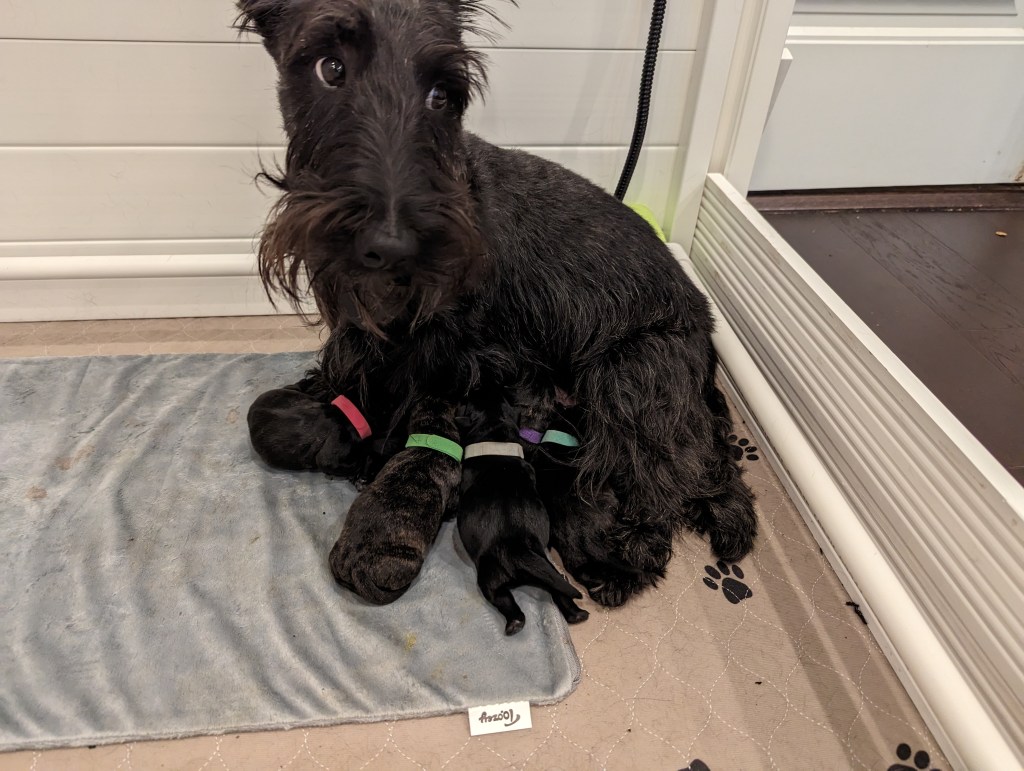
Skye delivered another puppy roughly every thirty minutes and did so well throughout the process. She’s now the proud mom of five little pups, three boys and two girls.
The little pink collared girl is minimal brindle with a light dusting of silver. The white collared boy is the only jet black puppy of this litter. The others are a range of beautiful golden brindle that will probably lighten up to silver as they age.
Brindle Scotties are by far and away my favorite, so I’m really excited about these little guys!
The little teal boy and the little pink girl both have tiny patches of white on them as well! Skye’s mother has a white streak on her chest just like this wee lass here. It’s so interesting to see how genetics play out as the generations build.
Look at those whale eyes
Skye has been a very attentive but anxious mother so far. We’ve changed the location of her whelping box to a more secluded location in our master closet and reduced the size of it by half. Even still, she’s feeling very unnerved by the sounds of the household in the distance. There’s not much more we can do to help with this besides give her some privacy and wait for her to acclimate to motherhood a bit.
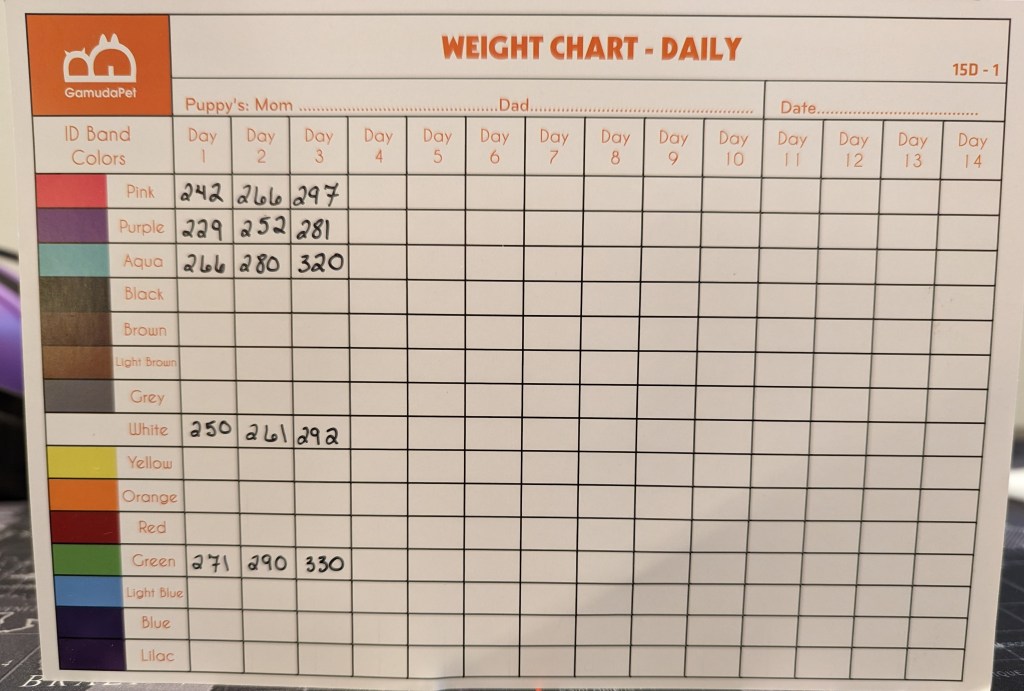
The good news is that her pups are thriving under her care. Their weights are steadily climbing. The goal is to gain 10% of their body weight per day after the second day and we’re not far off from that. We’ll continue to keep an eye on all of them to ensure no pup is falling behind the curve.
So that’s it for now! I’ll post another update in a few days or so.
We’re eagerly awaiting a litter of puppies here at Dupplin Scotties, and preparations for this joyous (and hectic!) event are almost complete. Although her pups aren’t quite due yet, we’ve been hard at work getting everything arranged for this first-time momma. Dad gets to miss all of these theatrics, I’m afraid.
Isn’t he handsome?!
In case you haven’t met Dad yet, this is Sir Bhodie of Harbert Ranch Terriers. He was specifically chosen for this pairing because he has a wonderful laid-back temperament without any of the dramatics that Scotties and terriers in general are known to display. He also has the lowest COI of any purebred dog I’veever met and a wonderful brindle coloration that’s very similar to Skye’s. Both of them carry the genetics to produce wheaten puppies, so we may get an array of colors. Only time will tell.
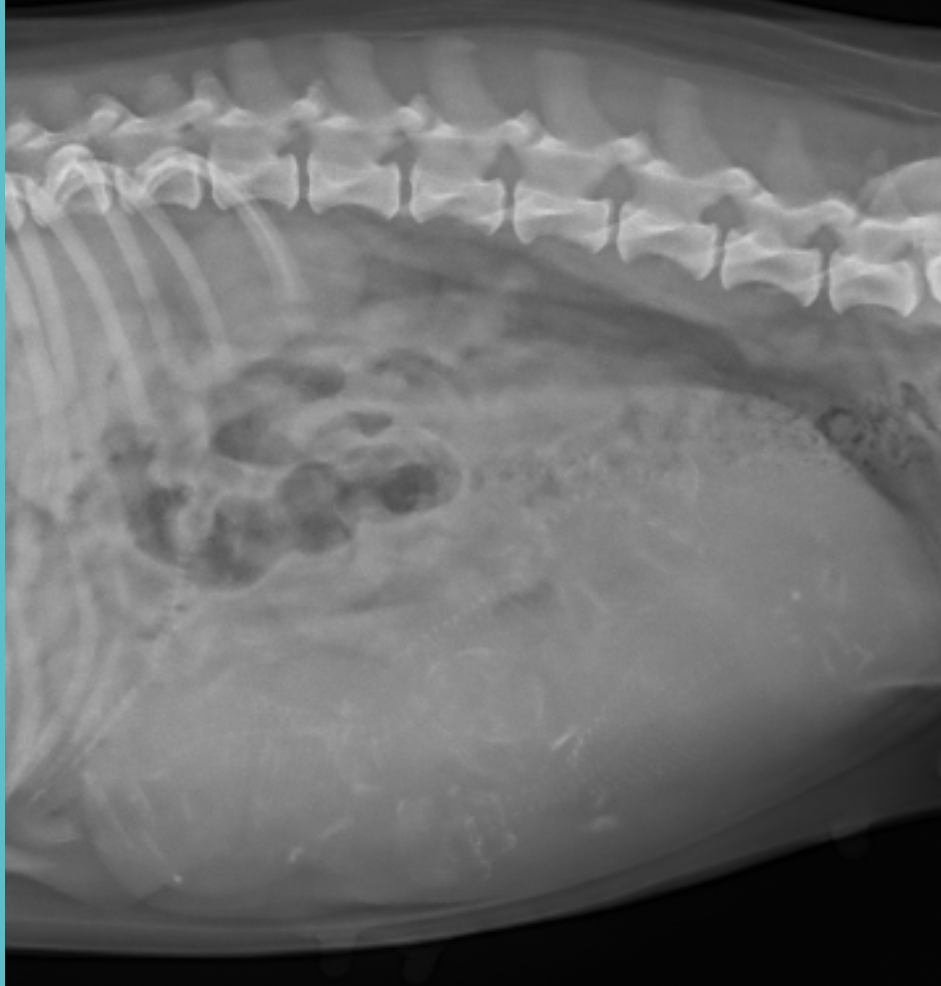
Although there’s still some time left before they make their grand arrival into the world, they are now faintly visible on radiography. This is an important appointment for a pregnant dog to have. If a dam is pregnant with only one puppy, the chances of her going into labor spontaneously are very low. Even if they do, their pup would likely be too large to deliver naturally anyway. Most singleton litters require a cesarean delivery.
Fortunately, that’s not the case with Skye. Her imaging looked great. Her puppies’ skeletons are still calcifying so you’ll have to squint a bit, but see if you can spot them all.
Yes, this is a trick question.
How many did you count? Did you see any at all? Let me help you out here a bit:
This is also a trick question.
As a nurse practitioner, I’m no stranger to reading x-rays. Skye’s veterinarian counted four puppies, until I squinted a bit and pointed something out to her.
If you look at the puppy outlined in green, there’s actually another spinal column that crosses behind it. It’s very faint due to the fact that it’s on the other side of her abdomen, but it’s undeniably there. So, I suspect that she’s expecting a total of five little bundles of joy. Hooray!
Fun fact: pool noodles don’t come in white.
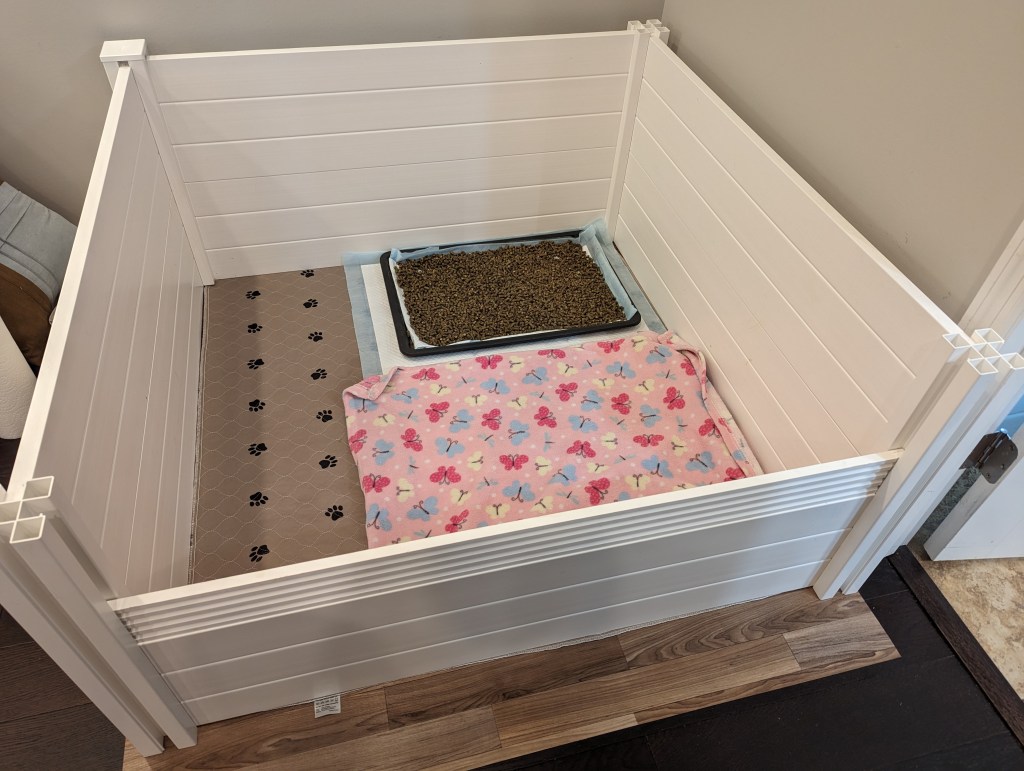
Her whelping area is all set up and ready to go. The litter trays for puppy potty training are still pending purchase, but they won’t be needed for the first three weeks anyway. All that’s left to do is wait for the big day and hope that no complications arise!


























 Dupplin Scotties